Kagawa has a long history with udon, and the local environment played an important part in it.
Wheat has traditionally been grown in the area, and salt was also produced along the Seto Inland Sea. With these ingredients available locally, udon gradually became part of the food culture in Kagawa.
Over time, it became much more than just a local specialty. Udon became part of everyday life, and that’s still easy to see today. There are udon shops all over Kagawa, from popular restaurants to small local places where people stop for a quick bowl.
You’ll also often hear the name Sanuki udon. “Sanuki” is the old name for the area that is now Kagawa Prefecture.
So when you hear “Sanuki udon,” you’re basically hearing the name of Kagawa’s own style of udon.
What Makes Sanuki Udon Different?
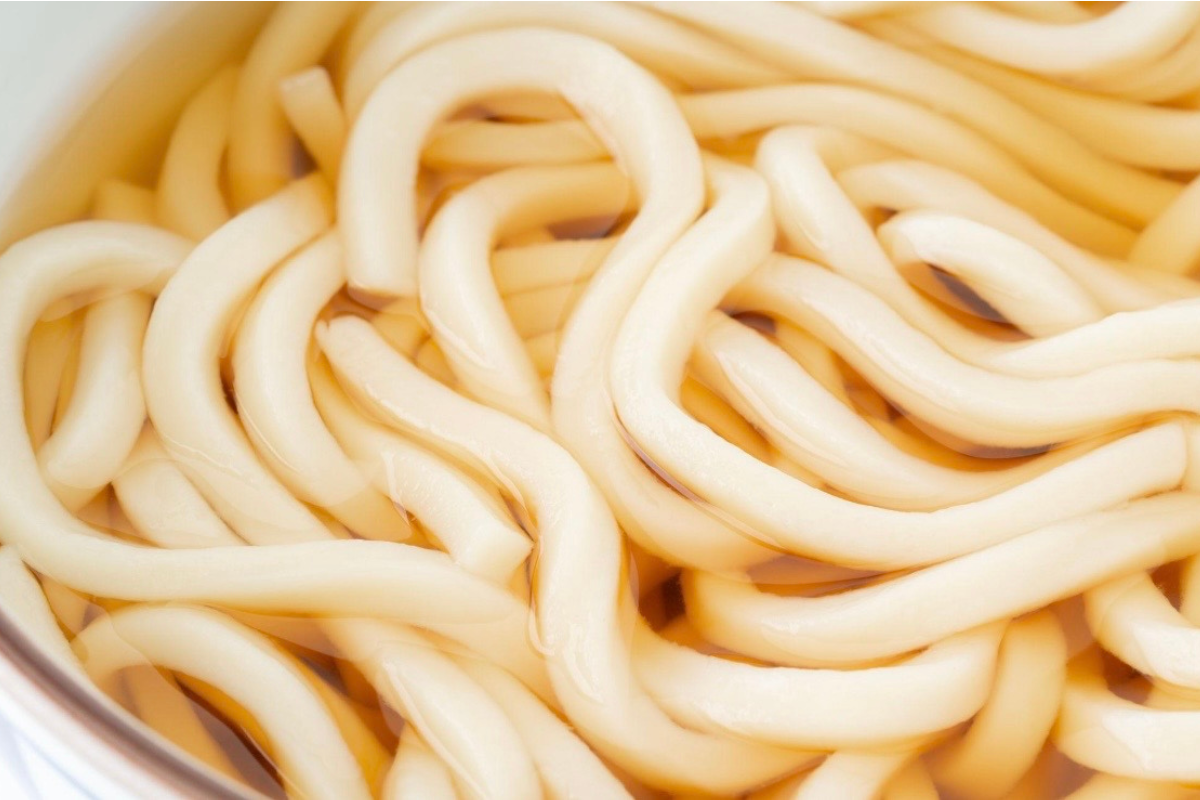
Sanuki udon is known for its firm and chewy texture. In Japanese, this is often described as koshi (コシ).
The noodles are usually thick and have a satisfying bite, which is one of the things that makes Sanuki udon so recognizable. Even with a simple broth or just a little soy-based sauce, the noodles themselves are a big part of the experience.
But Sanuki udon isn’t just one specific dish. You can eat it hot or cold, with broth or without, and there are several different ways to order it.
That’s why names like kake, bukkake, and kamaage can be a little confusing the first time you visit an udon shop, but once you know the difference, ordering is actually pretty simple.
Kake, Bukkake & Kamaage — What’s the Difference?
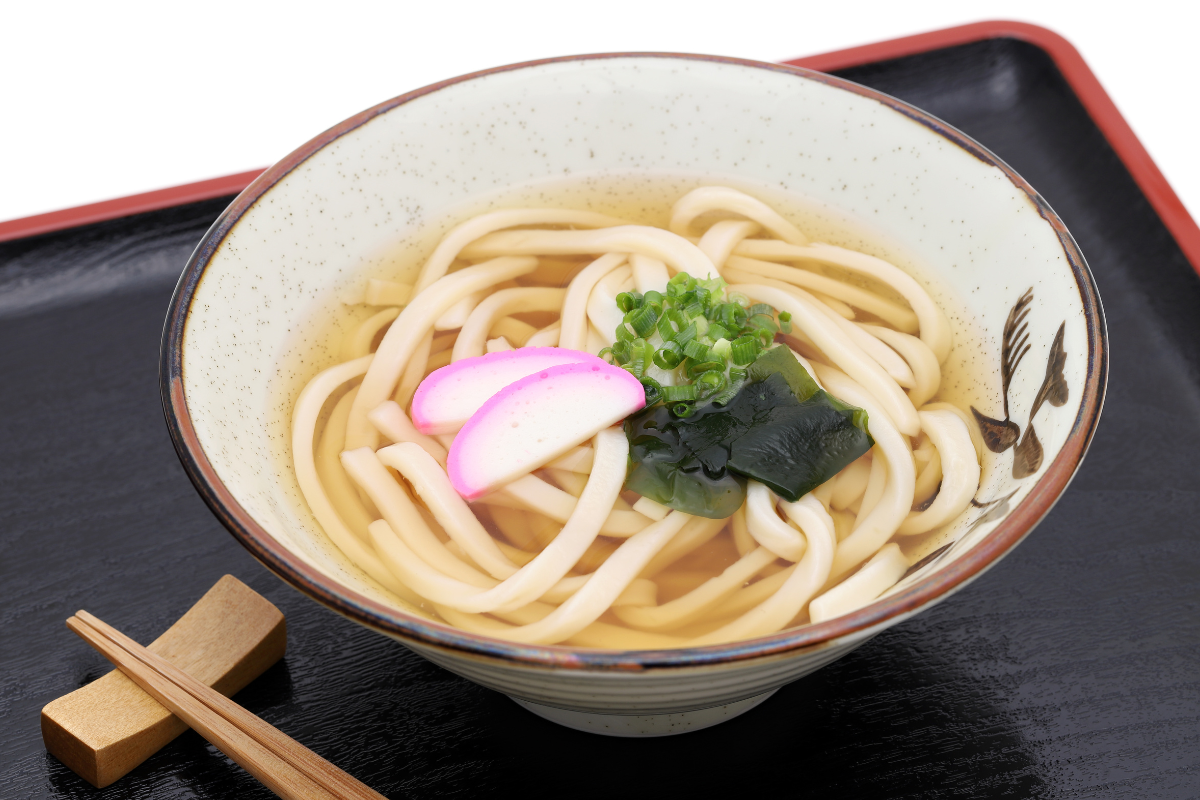
When you look at the menu in a Sanuki udon shop, you’ll probably see words like kake, bukkake, and kamaage.
They’re all udon, but the way they’re served is a little different.
Kake udon (かけうどん)
This is one of the simplest styles. The noodles are served in a light, warm dashi broth. It’s simple, comforting, and a good choice if you’re not sure what to order.
Bukkake udon (ぶっかけうどん)
Bukkake udon is served with a smaller amount of stronger, soy-based sauce poured over the noodles instead of a bowl full of broth. You can often choose it hot or cold.
Kamaage udon (釜揚げうどん)
Kamaage udon is served hot, usually straight from the cooking water, with a separate dipping sauce. You pick up the noodles and dip them into the sauce as you eat.
There are plenty of other styles too, but knowing these three will make your first visit to a Sanuki udon shop a lot easier.
How Self-Service Udon Shops Work
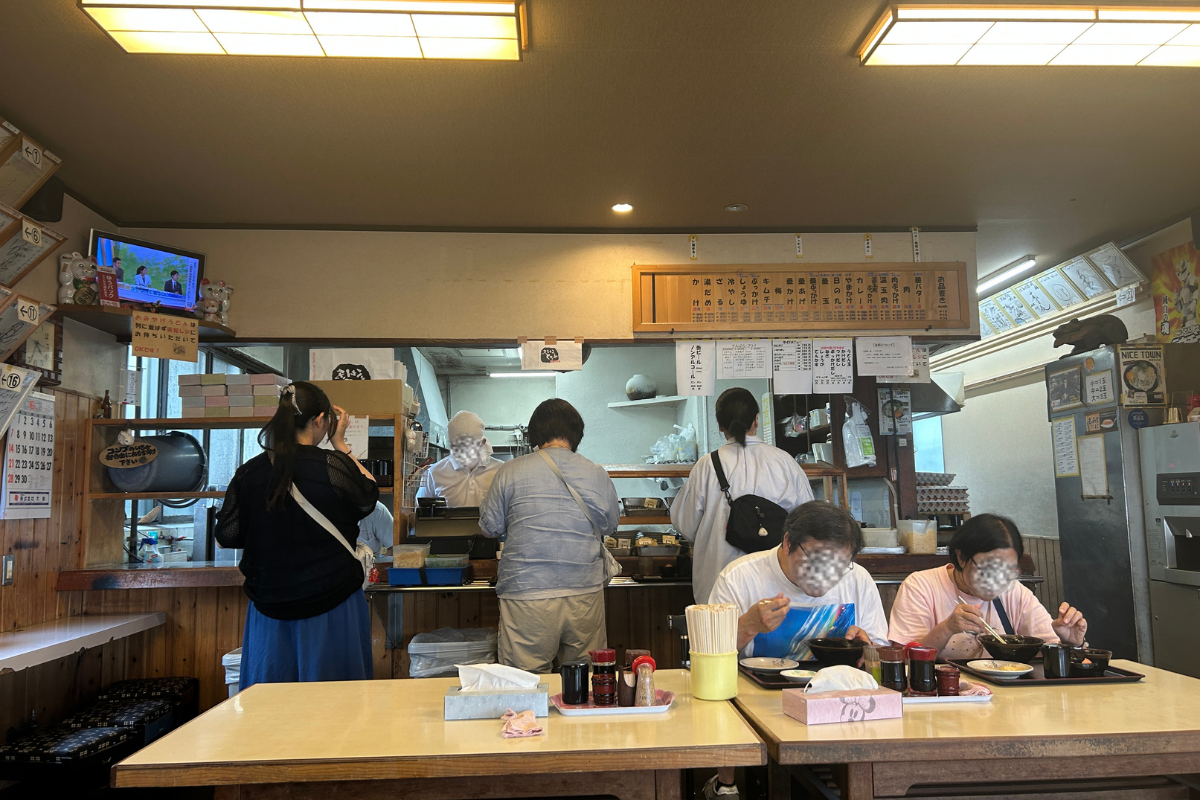
Many udon shops in Kagawa are self-service, and if it’s your first time, the system can feel a little confusing.
The exact setup is different from shop to shop, but usually, you’ll start by choosing your udon and telling the staff what you’d like.
Then you move along the counter, where you can add toppings like tempura, green onions, or ginger. At some shops, you may also need to do part of the preparation yourself, such as warming the noodles or adding the broth.
After that, you pay, find a seat, and enjoy your udon.
When you’re finished, don’t forget to return your tray, bowl, and dishes to the designated return area.
It might feel a little unfamiliar the first time, but once you’ve done it, it’s pretty simple — and it’s part of the fun of eating udon in Kagawa.
Useful Japanese for Ordering Udon
You don’t need to speak much Japanese to order udon, but knowing a few simple phrases can make things easier — especially at small local shops.
Here are a few you can actually use.
“Kake udon, onegaishimasu.”
かけうどん、お願いします。
Kake udon, please.
You can simply say the name of the udon you want followed by onegaishimasu (お願いします).
“Shō, onegaishimasu.”
小、お願いします。
Small, please.
Many udon shops have different sizes. You might see:
- 小 (shō) — small
- 中 (chū) — medium
- 大 (dai) — large
One thing to remember: the actual amount can vary quite a bit depending on the shop!
“Atatakai no de.”
温かいので。
Hot, please.
“Tsumetai no de.”
冷たいので。
Cold, please.
Some types of udon, especially bukkake, can be ordered hot or cold.
And honestly, you don’t need to make a perfect Japanese sentence. Saying something simple like “Bukkake, shō, tsumetai no de onegaishimasu” is enough to get your order across.
If you’d like to practice more natural Japanese for everyday situations, you can also check out my online Japanese lessons.
Udon as Part of Everyday Life in Kagawa
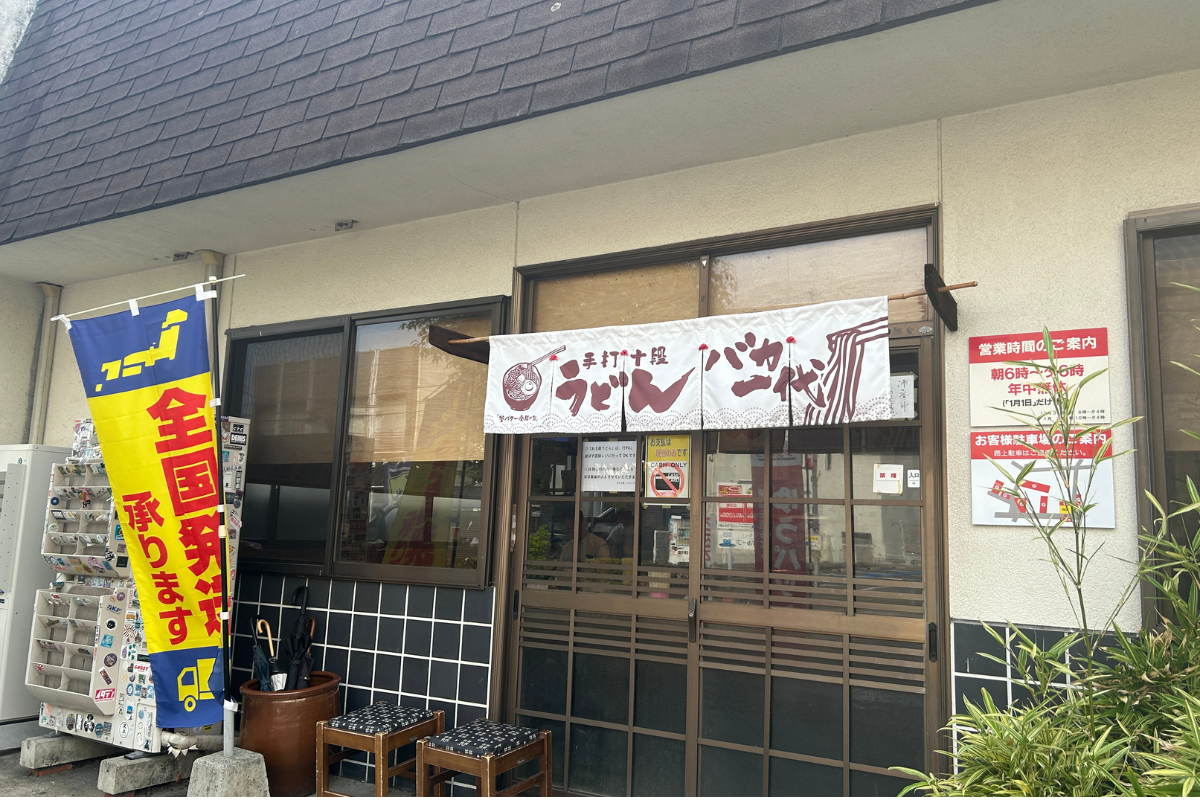
Udon in Kagawa isn’t only something people eat when they go out for a special meal. For many people, it’s simply part of everyday life.
You might stop at an udon shop for a quick lunch, eat a bowl before heading somewhere else, or visit a favorite local shop you’ve been going to for years.
Many shops are casual and simple. You order, eat, return your tray, and you’re on your way. That relaxed feeling is one of the things I like about eating udon in Kagawa.
Of course, there are famous shops that visitors travel to try, but some of the most interesting places are just normal neighborhood udon shops filled with local customers.
That’s probably the best way to understand why Kagawa is so closely connected with udon. It isn’t just a food the prefecture is famous for, it’s part of life here.
Final Thoughts
If you visit Kagawa, trying Sanuki udon is almost a must — but you don’t need to search only for the most famous shop.
Sometimes, walking into a small local udon shop and figuring out how everything works is part of the experience.
Choose your udon, add a piece of tempura if something looks good, and don’t worry too much about getting everything right. Even a few simple Japanese words can help, and most importantly, just enjoy your bowl.
Sanuki udon may be what Kagawa is famous for, but once you spend some time here, you start to see that it’s also something much simpler: an everyday part of life in Kagawa.
Want to learn more about Shikoku? You can also read What Is Shikoku Known For? Things to See, Eat & Experience.