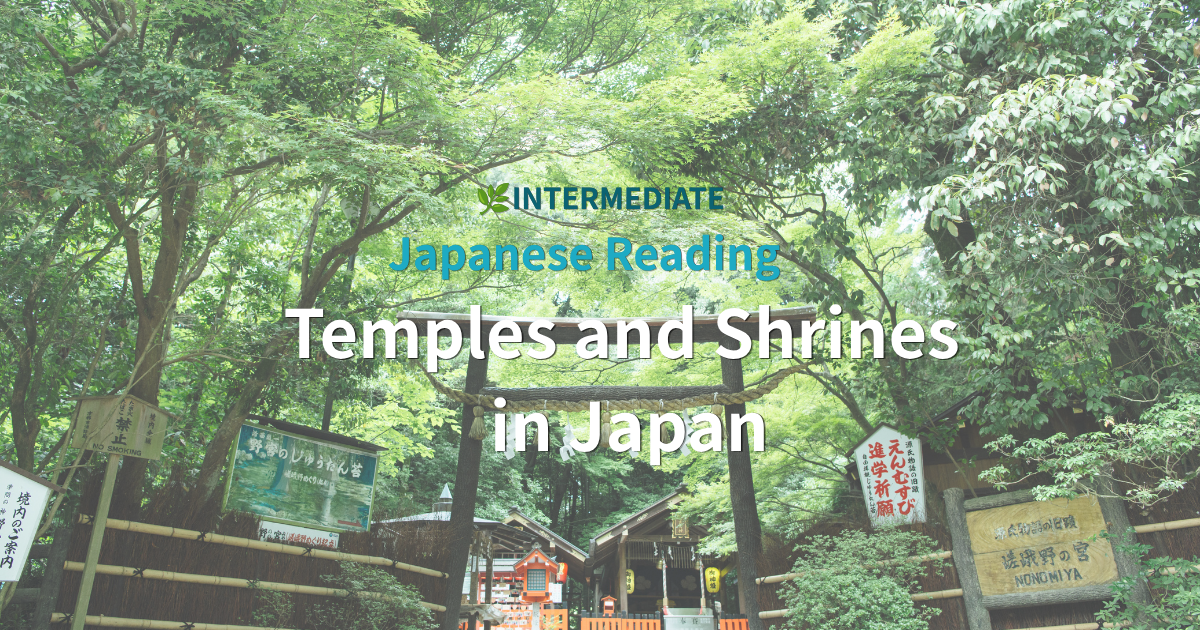
Practice your Japanese reading with a story about the difference between temples and shrines in Japan.
This reading is designed for intermediate learners, around JLPT N4–N3 level. You’ll practice useful vocabulary and expressions while learning some simple ways to tell temples and shrines apart.
🌿 Intermediate · JLPT N4–N3
Japanese Reading
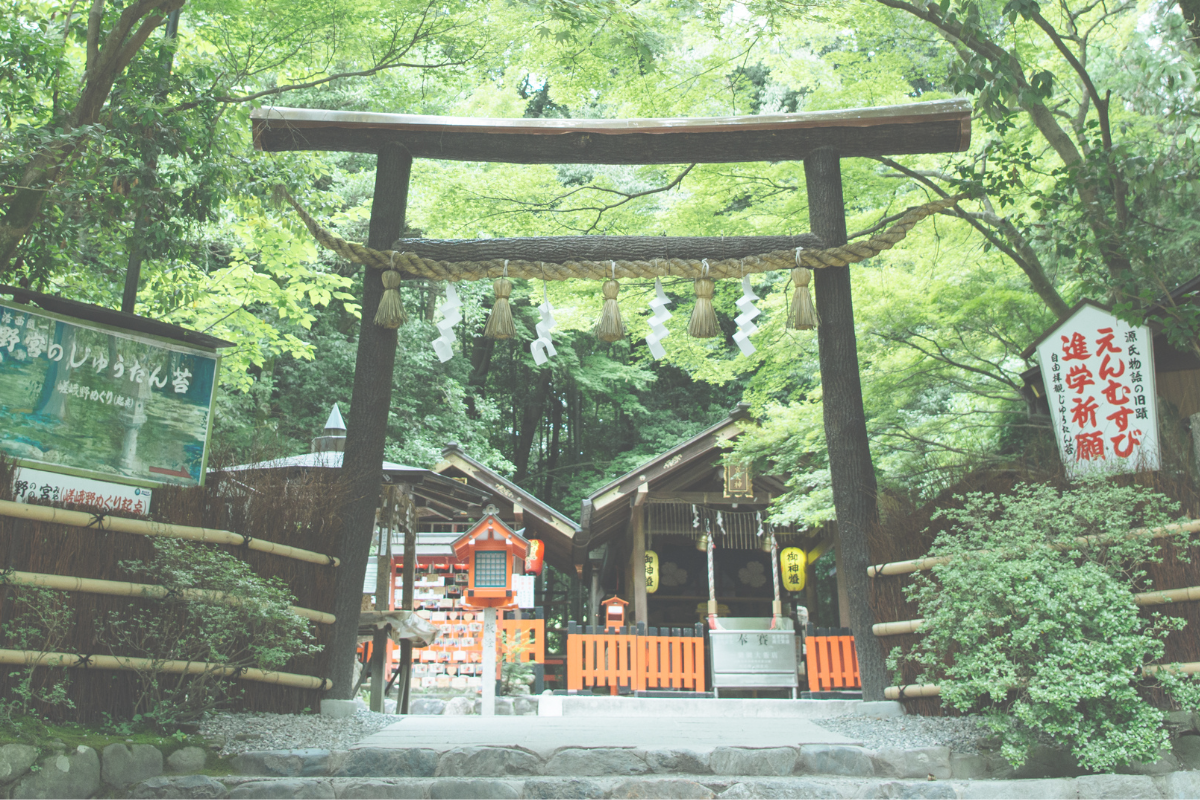
ある日、友達と町を歩いていると、小さな神社の前を通りました。
友達が「お寺と神社って、どうやって見分けるの?」と聞いたので、私は少し考えてから答えました。
「一番分かりやすいのは、入口を見ることかな。
神社には鳥居があることが多いよ」
神社は神道と関係があり、神様をまつる場所です。
一方、お寺は仏教の施設で、仏像やお墓があるところも多くあります。
ただ、建物を見るだけでは、すぐに区別できない場合もあります。
「じゃあ、お寺には何があるの?」と友達が聞きました。
「お寺によって違うけど、入口に大きな門があったり、お寺の中に仏像があったりするよ。鐘があるところもあるね」
日本では、お正月に神社へ初詣に行く人もいれば、お寺へ行く人もいます。
また、観光や散歩でどちらにも立ち寄ることがあります。
お寺と神社にはそれぞれ違いがありますが、名前や入口を確認すると、少しずつ見分けやすくなります。
Comprehension Questions
- 友達は何について質問しましたか?
- 神社の入口には何があることが多いですか?
- 神社は何と関係がありますか?
- お寺にはどのようなものがある場合がありますか?
- 建物を見るだけで、いつでもお寺と神社を区別できますか?
- お正月には、必ず神社へ行くと書いてありますか?
Vocabulary
- お寺(おてら) — Buddhist temple
- 神社(じんじゃ) — Shinto shrine
- 違い(ちがい) — difference
- 見分ける(みわける) — to tell apart / distinguish
- 入口(いりぐち) — entrance
- 鳥居(とりい) — torii gate
- 神道(しんとう) — Shinto
- 神様(かみさま) — deity / god
- まつる — to enshrine / worship
- 一方(いっぽう) — on the other hand
- 仏教(ぶっきょう) — Buddhism
- 仏像(ぶつぞう) — Buddhist statue
- 区別する(くべつする) — to distinguish
- 初詣(はつもうで) — first temple or shrine visit of the New Year
- 立ち寄る(たちよる) — to stop by
Useful Expressions
1. ~ことが多い — often / tend to
神社には鳥居があることが多いよ。
Shrines often have a torii gate.
Use ~ことが多い when something happens frequently or is generally common, without saying that it is always true.
・週末は家で料理することが多いです。
I often cook at home on weekends.
2. 一方、~ — on the other hand / whereas
一方、お寺は仏教の施設です。
Temples, on the other hand, are Buddhist institutions.
Use 一方 when comparing or contrasting two things.
・兄はスポーツが好きです。一方、私は家で本を読むほうが好きです。
My brother likes sports. On the other hand, I prefer reading at home.
3. ~場合もある — there are also cases when / sometimes
すぐに区別できない場合もあります。
Sometimes it can be difficult to tell them apart right away.
Use ~場合もある when something is possible in certain situations but is not always the case.
・予約がなくても入れる場合もあります。
In some cases, you can enter without a reservation.
4. ~もいれば、~もいる — some…, while others…
神社へ初詣に行く人もいれば、お寺へ行く人もいます。
Some people visit a shrine for the New Year, while others visit a temple.
Use this pattern when talking about different people, choices, or situations within the same group.
・朝ご飯を毎日食べる人もいれば、食べない人もいます。
Some people eat breakfast every day, while others don’t.
English Translation
One day, while walking around town with a friend, we passed a small shrine.
My friend asked, “How can you tell the difference between a temple and a shrine?” I thought for a moment before answering.
“The easiest way is probably to look at the entrance. Shrines often have a torii gate.”
Shrines are connected with Shinto and are places where kami are enshrined. Temples, on the other hand, are Buddhist institutions, and many have Buddhist statues or graves.
However, sometimes it can be difficult to tell them apart just by looking at the buildings.
“So what do temples have?” my friend asked.
“It depends on the temple, but there may be a large gate at the entrance or Buddhist statues inside. Some also have bells.”
In Japan, some people make their first visit of the New Year to a shrine, while others go to a temple. People may also stop by either one while sightseeing or taking a walk.
Temples and shrines have their own differences, but checking the name and entrance can gradually make them easier to tell apart.