If you travel around Japan by train, you’ll quickly come across words that don’t always appear in beginner textbooks. Some are written on signs and departure boards, while others are commonly used in station announcements.
In this article, you’ll learn practical Japanese train and station vocabulary such as 乗り換え, 各駅停車, 終電, and 遅延, with natural examples to help you understand what you see and hear while traveling in Japan.
Level: Beginner–Intermediate
Japanese Train & Station Vocabulary
乗り換え(のりかえ)
Meaning: transfer / changing trains
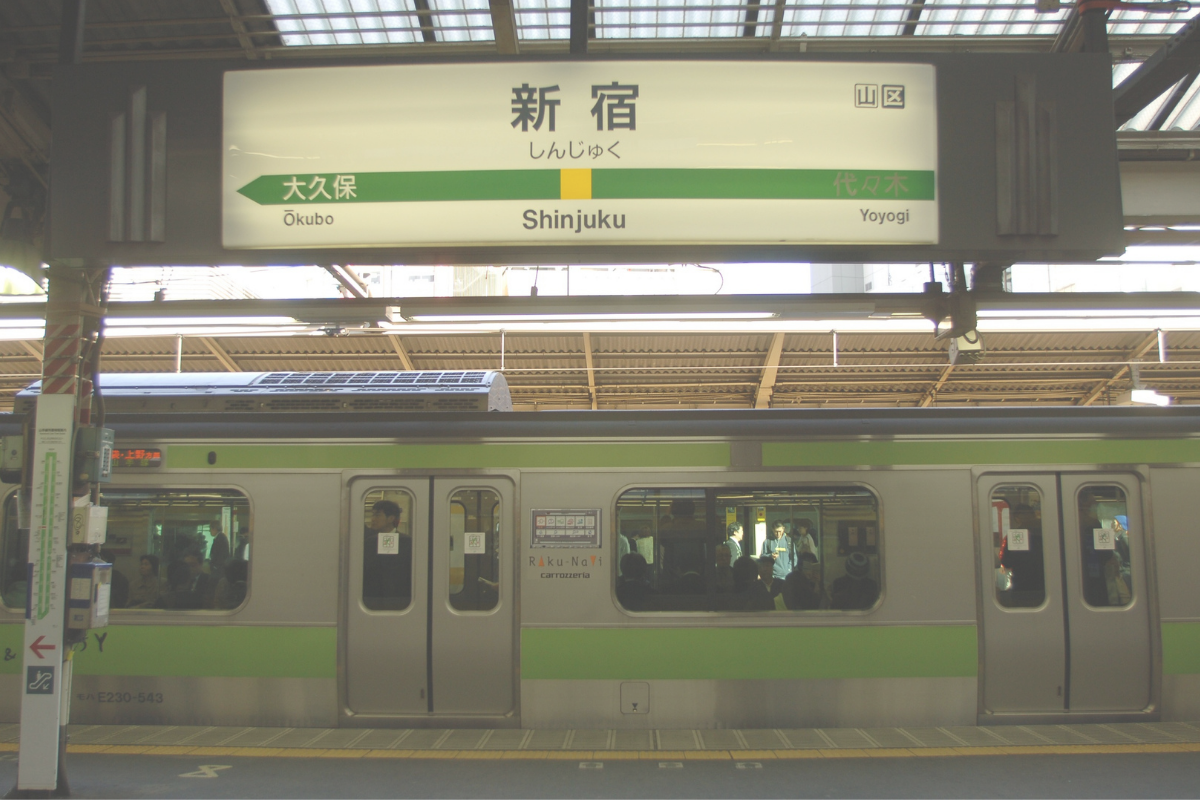
乗り換え means changing from one train or line to another during your journey. You’ll often see it on station signs and route apps, and hear 乗り換える when talking about actually changing trains.
Examples:
・新宿で中央線に乗り換えます。
I’ll transfer to the Chuo Line at Shinjuku.
・この駅で乗り換えたほうが早いよ。
It’s faster if you change trains at this station.
各駅停車(かくえきていしゃ)
Meaning: local train / train that stops at every station
各駅停車 is a train that stops at every station along its route. In everyday conversation, you may also hear 各停(かくてい), a shorter way of saying it.
Examples:
・この電車は各駅停車です。
This is a local train.
・急行じゃなくて、各駅停車に乗った。
I took the local train instead of the express.
急行(きゅうこう)
Meaning: express train
急行 is a train that skips some stations and usually reaches its destination faster than a local train. Train categories vary depending on the railway company, so always check whether your station is one of the stops.
Examples:
・この駅に急行は止まりますか?
Does the express train stop at this station?
・急行に乗ったほうが早いよ。
It’ll be faster if you take the express.
終電(しゅうでん)
Meaning: last train
終電 means the last train of the day on a particular route. It’s a very useful word when you’re out late and need to make sure you can still get home by train.
Examples:
・終電は何時ですか?
What time is the last train?
・急がないと終電に間に合わないよ。
If we don’t hurry, we won’t make the last train.
遅延(ちえん)
Meaning: delay
遅延 means a delay in train service. It is commonly used on station displays, railway apps, and official announcements. In everyday conversation, 遅れる is also very common.
Examples:
・電車が10分ほど遅延している。
The train is delayed by about ten minutes.
・事故の影響で遅延が発生しています。
There are delays due to an accident.
運休(うんきゅう)
Meaning: service suspension / cancellation
運休 means that a train or other transport service is not running. You may see this word during bad weather, accidents, maintenance, or other disruptions.
Examples:
・大雨で一部の電車が運休している。
Some trains are not running because of the heavy rain.
・この電車は今日は運休です。
This train is not running today.
運転見合わせ(うんてんみあわせ)
Meaning: temporary suspension of service
運転見合わせ means that train service has been temporarily stopped. Unlike a simple delay, trains may not be moving at all while the railway company deals with a problem.
Examples:
・事故のため、現在運転を見合わせています。
Train service is currently suspended due to an accident.
・運転見合わせみたいだから、別のルートで行こう。
It looks like the trains have stopped running, so let’s take another route.
ホーム
Meaning: train platform
ホーム means the platform where you wait for and board a train. It comes from the English word “platform,” but Japanese normally shortens it to ホーム.
Examples:
・電車は3番ホームから出ます。
The train leaves from platform 3.
・ホームで電車を待っている。
I’m waiting for the train on the platform.
改札(かいさつ)
Meaning: ticket gate
改札 refers to the ticket gates you pass through when entering or leaving the paid area of a station. 改札口(かいさつぐち) is also commonly used.
Examples:
・駅の改札で待ってるね。
I’ll wait for you at the ticket gate.
・改札を出たら、右に曲がってください。
After you go through the ticket gate, turn right.
始発(しはつ)
Meaning: first train
始発 often means the first train of the day. Depending on the context, it can also refer to a train that starts its route from a particular station.
Examples:
・明日は始発で東京に行く。
I’m going to Tokyo on the first train tomorrow.
・始発は何時ごろですか?
About what time is the first train?
Try It in a Real Conversation
(It looks like the train is delayed.)B: そうなの?乗り換えに間に合うかな。 (Really? I wonder if we’ll make our transfer.)A: 急行は運転を見合わせてるみたい。
(It looks like the express trains are temporarily suspended.)
B: じゃあ、各駅停車で行こうか。
(Then shall we take the local train?)
A: うん。そのほうがよさそうだね。
(Yeah. That sounds like the better option.)
Quick Review
- 乗り換え(のりかえ) — transfer / changing trains
- 各駅停車(かくえきていしゃ) — local train / train that stops at every station
- 急行(きゅうこう) — express train
- 終電(しゅうでん) — last train
- 遅延(ちえん) — delay
- 運休(うんきゅう) — service suspension / cancellation
- 運転見合わせ(うんてんみあわせ) — temporary suspension of service
- ホーム — train platform
- 改札(かいさつ) — ticket gate
- 始発(しはつ) — first train
You don’t need to memorize all of them at once. Start by noticing these expressions when you hear or read Japanese, and try using one or two of them the next time you talk about the weather.