Practice your Japanese reading with a story about students cleaning their own classrooms and school spaces in Japan.
This reading is designed for advanced learners, around JLPT N2–N1 level. Through a conversation between a parent and child, you’ll explore different perspectives on responsibility, education, and the purpose of cleaning at school.
🌳 Advanced · JLPT N2–N1
Japanese Reading
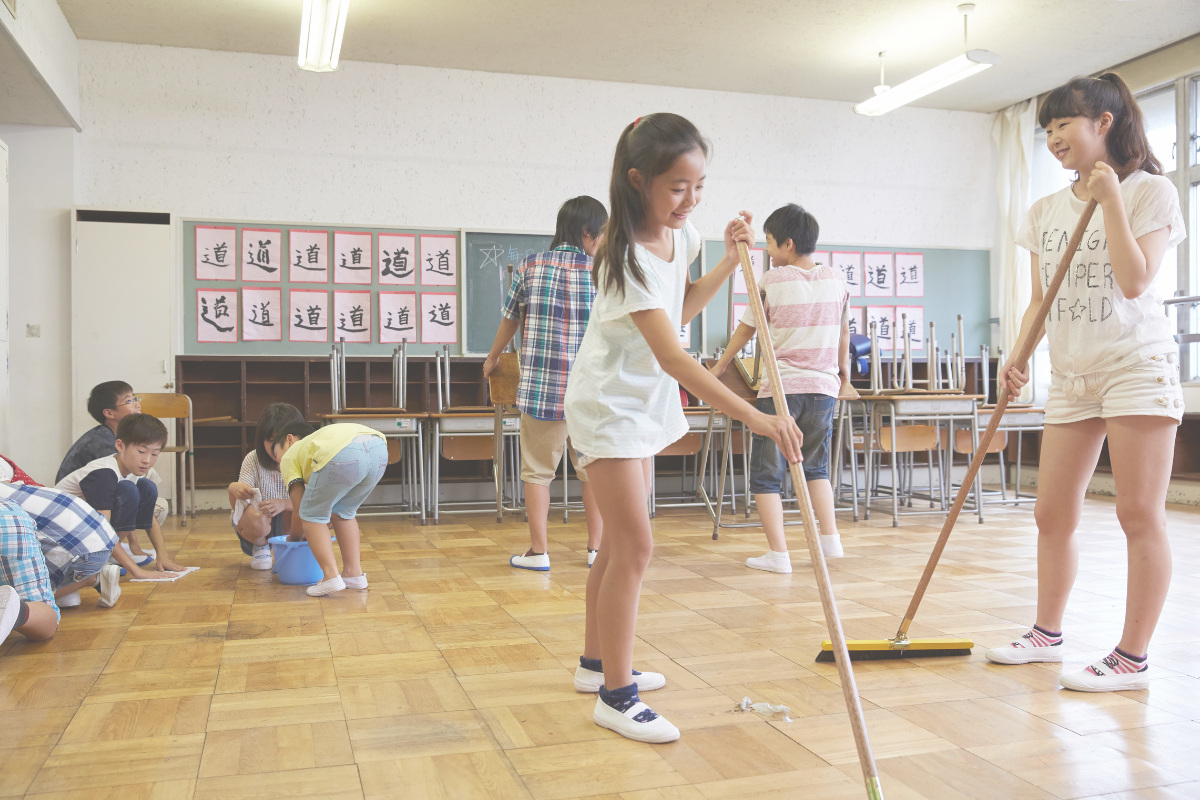
先日、中学生の娘が「どうして私たちが学校を掃除しないといけないの?」と聞いてきた。
私は「自分たちが使う場所だから」と答えたが、それだけで十分なのか少し迷った。
学校の掃除には、みんなで使う場所を大切にしたり、役割を分担したりする意味があると言われる。
ただ、掃除をすれば自然に責任感が身につく、というほど単純なものでもない。
また、生徒が掃除をするからといって、すべてを任せればいいわけではない。
衛生管理が必要な場所や専門的な作業まで、「教育のため」という理由で生徒に求めるのは違うように思う。
大切なのは、掃除をするかしないかより、なぜするのかを考えることではないだろうか。
昔から続いているというだけでなく、その目的を説明できてこそ、学校で行う意味があるのかもしれない。
Comprehension Questions
- 娘は筆者にどのような質問をしましたか?
- 学校の掃除には、どのような意味があると言われていますか?
- 筆者が「掃除をすれば自然に責任感が身につく」と単純には考えていないことは、本文のどこから分かりますか?
- 筆者は、生徒にすべての掃除を任せることについてどのように考えていますか?
- 最後に、筆者は学校で掃除をすることについて何が大切だと考えていますか?
Vocabulary
- 中学生(ちゅうがくせい) — junior high school student
- 掃除(そうじ) — cleaning
- 十分(じゅうぶん) — enough / sufficient
- 役割(やくわり) — role
- 分担する(ぶんたんする) — to divide / share responsibilities
- 責任感(せきにんかん) — sense of responsibility
- 身につく(みにつく) — to acquire / develop
- 単純(たんじゅん) — simple / straightforward
- 任せる(まかせる) — to leave something to someone
- 衛生管理(えいせいかんり) — hygiene management
- 専門的(せんもんてき) — specialized / professional
- 作業(さぎょう) — task / work
- 教育(きょういく) — education
- 求める(もとめる) — to expect / require
- 目的(もくてき) — purpose
Useful Expressions
1. ~というほど~ない — not so … that / not as simple as saying
掃除をすれば自然に責任感が身につく、というほど単純なものでもない。
It is not as simple as saying that cleaning will automatically give students a sense of responsibility.
Use this pattern when you want to show that a situation is more complicated than a simple statement suggests.
・一度説明を聞けば誰でも理解できる、というほど簡単な問題ではない。
It is not such a simple issue that everyone can understand it after hearing one explanation.
2. ~からといって — just because / simply because
生徒が掃除をするからといって、すべてを任せればいいわけではない。
Just because students do the cleaning doesn’t mean everything should be left to them.
Use this expression when one fact does not automatically justify a particular conclusion or action.
・便利だからといって、誰にとっても必要だとは限らない。
Just because something is convenient doesn’t mean everyone needs it.
3. ~わけではない — it does not mean that / it is not the case that
すべてを任せればいいわけではない。
It doesn’t mean that everything should simply be left to them.
Use this expression to reject or soften an assumption without completely denying the situation itself.
・昔からの習慣をすべて変えるべきだと言っているわけではない。
I’m not saying that every long-standing custom should be changed.
4. ~てこそ — only when / only by
その目的を説明できてこそ、学校で行う意味があるのかもしれない。
Perhaps it only has meaning as a school activity when its purpose can actually be explained.
Use this expression to emphasize that something becomes meaningful or possible only when a certain condition is met.
・相手の立場を理解してこそ、本当に必要な支え方を考えられる。
Only by understanding the other person’s situation can we think about the support they truly need.
English Translation
The other day, my junior high school daughter asked me, “Why do we have to clean our school?” I answered, “Because it’s a place you use yourselves,” but I wondered whether that explanation was really enough.
School cleaning is sometimes said to teach students to take care of shared spaces and to divide responsibilities. Still, it is not as simple as saying that cleaning will automatically give students a sense of responsibility.
Also, just because students clean the school doesn’t mean everything should be left to them. I don’t think students should be expected to handle areas that require careful hygiene management or specialized work simply because it is “for educational purposes.”
Perhaps what matters is not whether students clean or not, but thinking about why they do it. Rather than doing it simply because it has been done for a long time, perhaps cleaning only has meaning as a school activity when its purpose can be explained.