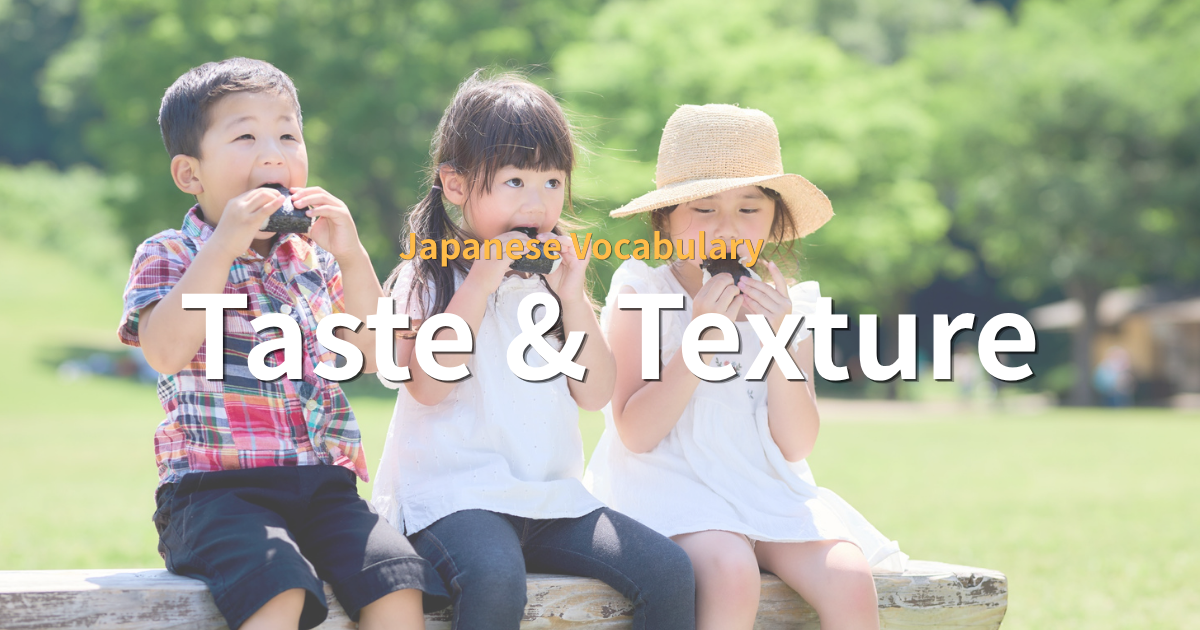
When talking about food in Japanese, おいしい is only the beginning. There are many useful words for describing how food tastes and feels, from something light and refreshing to something rich, crispy, or chewy.
In this article, you’ll learn 10 useful Japanese taste and texture words that come up naturally when talking about food, with meanings, examples, and practical context.
Level: Intermediate
Japanese Taste & Texture Vocabulary
さっぱり
Meaning: light / refreshing / not heavy
さっぱり is often used for food that tastes light and refreshing rather than rich or heavy. It can describe dishes with a clean, fresh taste, especially when they aren’t too oily.
Examples:
・このサラダはレモンが入っていて、さっぱりしている。
This salad has lemon in it, so it tastes light and refreshing.
・今日は暑いから、さっぱりしたものが食べたい。
It’s hot today, so I want something light and refreshing.
こってり
Meaning: rich / heavy
こってり describes food with a rich, strong, often fatty taste. It’s commonly used for ramen, sauces, soups, and other dishes with a heavier flavor.
Examples:
・このラーメンのスープはかなりこってりしている。
The soup in this ramen is quite rich.
・昨日はこってりしたものを食べたから、今日は軽いものにしよう。
I had something rich yesterday, so I’ll have something lighter today.
もちもち
Meaning: chewy / soft and springy
もちもち describes a pleasantly soft, chewy, and slightly springy texture. It comes from the texture associated with 餅(もち), but it can also describe bread, noodles, dumpling skins, and other foods.
Examples:
・このパン、生地がもちもちしていておいしい。
This bread is delicious—the dough is soft and chewy.
・ここのうどんはもちもちした食感が特徴です。
The udon here is known for its pleasantly chewy texture.
サクサク
Meaning: crispy / light and crunchy
サクサク describes a light, pleasant crispness. It’s commonly used for fried foods, cookies, pastries, and other foods that make a crisp sound when you bite into them.
Examples:
・この天ぷら、衣がサクサクしてる。
The batter on this tempura is really crispy.
・焼きたてのクッキーはサクサクでおいしかった。
The freshly baked cookies were delicious and crisp.
カリカリ
Meaning: crunchy / crisp
カリカリ describes a harder, firmer crunch than サクサク. It’s often used for things like crispy bacon, toasted food, fried surfaces, or food cooked until crunchy.
Examples:
・ベーコンはカリカリに焼くのが好き。
I like my bacon cooked until crispy.
・ポテトの外側がカリカリで、中はやわらかい。
The potatoes are crispy on the outside and soft inside.
ふわふわ
Meaning: fluffy / soft and airy
ふわふわ describes something soft, light, and airy. It’s often used for pancakes, bread, cakes, eggs, and other foods with a fluffy texture.
Examples:
・このパンケーキ、すごくふわふわだね。
These pancakes are really fluffy.
・卵をよく混ぜると、ふわふわに仕上がるよ。
If you mix the eggs well, they’ll turn out nice and fluffy.
とろとろ
Meaning: thick and creamy / soft and runny
とろとろ describes a very soft, smooth, almost melting or runny texture. It can be used for eggs, cheese, stewed foods, sauces, and other foods with a soft, thick consistency.
Examples:
・卵がとろとろでおいしい。
The egg is soft and runny, and it’s delicious.
・チーズがとろとろに溶けている。
The cheese is melted and gooey.
あっさり
Meaning: light / mild / not rich
あっさり describes a light or mild taste that isn’t too rich, fatty, or strongly seasoned. It is similar to さっぱり, but あっさり often focuses more on the food being light in flavor.
Examples:
・このスープはあっさりしていて飲みやすい。
This soup is light and easy to drink.
・夜遅いから、あっさりした料理にしよう。
It’s late, so let’s have something light.
濃厚(のうこう)
Meaning: rich / full-bodied / intense
濃厚 describes a rich, concentrated flavor or creamy texture. It is often used for things like cheese, chocolate, desserts, soups, and sauces.
Examples:
・このチーズケーキは味が濃厚だね。
This cheesecake has a really rich flavor.
・濃厚なチョコレートの味がする。
It has a rich, intense chocolate flavor.
しっとり
Meaning: moist / soft and moist
しっとり describes a pleasantly moist and soft texture. It’s especially common when talking about cakes, bread, and other baked foods that aren’t dry.
Examples:
・このケーキ、すごくしっとりしている。
This cake is really moist.
・時間がたっても、パンがしっとりしていておいしかった。
Even after some time had passed, the bread was still soft and moist.
Try It in a Real Conversation
A: このラーメン、けっこうこってりしてるね。 (This ramen is pretty rich, isn’t it?)
B: うん。でも麺がもちもちでおいしい。
(Yeah. But the noodles are nice and chewy.)
A: 餃子も食べてみて。外がカリカリだよ。
(Try the gyoza too. They’re crispy on the outside.)
B: 本当だ。次はもう少しあっさりしたラーメンも食べてみたいな。
(You’re right. Next time I’d like to try a lighter ramen too.)
Quick Review
- さっぱり — light / refreshing / not heavy
- こってり — rich / heavy
- もちもち — chewy / soft and springy
- サクサク — crispy / light and crunchy
- カリカリ — crunchy / crisp
- ふわふわ — fluffy / soft and airy
- とろとろ — thick and creamy / soft and runny
- あっさり — light / mild / not rich
- 濃厚(のうこう) — rich / full-bodied / intense
- しっとり — moist / soft and moist
You don’t need to memorize all of them at once. Start by noticing these expressions when you hear or read Japanese, and try using one or two of them the next time you talk about the weather.