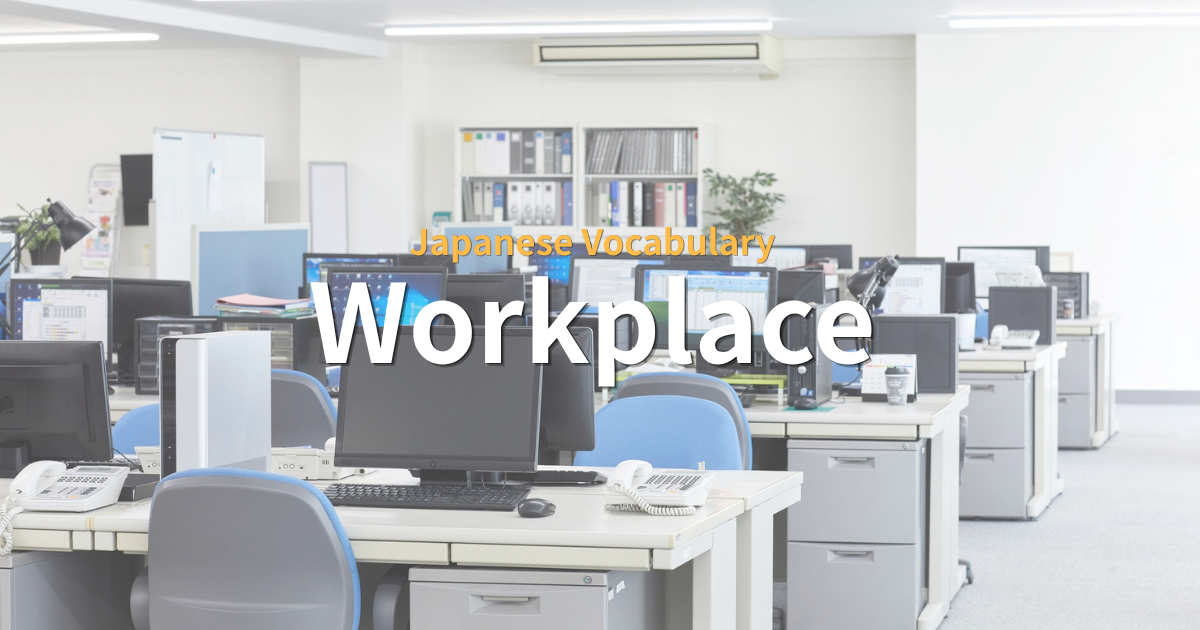
If you work in Japan or use Japanese with coworkers, knowing basic office vocabulary can make everyday conversations much easier. You’ll hear these words when talking about schedules, taking time off, finishing work, or sharing tasks with someone else.
In this article, you’ll learn practical Japanese workplace vocabulary such as 残業, 早退, 引き継ぎ, and 有給, along with natural examples of how these words are actually used at work.
Level: Intermediate
Japanese Workplace Vocabulary

残業(ざんぎょう)
Meaning: overtime / working overtime
残業 means working beyond your regular working hours. A very common expression is 残業する, meaning “to work overtime.”
Examples:
・今日は1時間くらい残業する予定です。
I’m planning to work about an hour of overtime today.
・仕事が早く終わったので、残業せずに帰れた。
I finished my work early, so I was able to go home without working overtime.
休憩(きゅうけい)
Meaning: break / rest
休憩 means taking a break from work or another activity. 休憩する means “to take a break,” while 休憩時間 refers to break time.
Examples:
・そろそろ休憩しようか。
Shall we take a break soon?
・休憩が終わったら、この作業を続けます。
I’ll continue this task after the break.
早退(そうたい)
Meaning: leaving work early
早退 means leaving work or school earlier than the scheduled finishing time. 早退する is commonly used when you need to leave before the end of the workday.
Examples:
・今日は用事があるので、少し早退します。
I have something to take care of today, so I’m leaving work a little early.
・昨日は3時ごろに早退した。
I left work early at around three yesterday.
引き継ぎ(ひきつぎ)
Meaning: handover / transferring responsibilities
引き継ぎ means passing work, information, or responsibilities from one person to another. It is commonly used when someone changes roles, takes time off, or leaves a job.
Examples:
・休みに入る前に引き継ぎをしておきます。
I’ll hand things over before I go on leave.
・担当が変わったので、昨日引き継ぎを受けた。
The person in charge changed, so I received the handover yesterday.
有給(ゆうきゅう)
Meaning: paid leave / paid vacation
有給 is a common shortened form of 有給休暇(ゆうきゅうきゅうか), meaning paid leave. In everyday workplace conversations, 有給を取る is a very common expression.
Examples:
・来週の金曜日に有給を取ります。
I’m taking paid leave next Friday.
・有給がまだ何日か残っている。
I still have a few days of paid leave left.
欠勤(けっきん)
Meaning: absence from work
欠勤 means being absent from work on a day you were expected to work. You may see it in workplace rules, attendance records, or conversations about someone being away from work.
Examples:
・今日は田中さんが欠勤しています。
Tanaka is absent from work today.
・昨日は急な事情で欠勤した。
I was absent from work yesterday because something unexpected came up.
出勤(しゅっきん)
Meaning: going to work / reporting for work
出勤 means going to your workplace to work. 出勤する means “to go to work,” while 出勤時間 refers to the time you start or report for work.
Examples:
・明日は9時に出勤します。
I’ll go to work at nine tomorrow.
・今日はいつもより早く出勤した。
I went to work earlier than usual today.
退勤(たいきん)
Meaning: leaving work / finishing work for the day
退勤 refers to finishing your work and leaving the workplace. You may also see it on attendance systems when clocking out.
Examples:
・今日は6時に退勤しました。
I finished work at six today.
・仕事が終わったら、忘れずに退勤の記録をしてください。
When you finish work, don’t forget to record that you’ve clocked out.
締め切り(しめきり)
Meaning: deadline
締め切り is the deadline for completing or submitting something. It is used not only at work, but also for applications, assignments, and many other situations.
Examples:
・この仕事の締め切りは金曜日です。
The deadline for this work is Friday.
・締め切りに間に合うように、今日から準備を始めた。
I started preparing today so I can meet the deadline.
担当(たんとう)
Meaning: person in charge / responsibility for something
担当 refers to the person responsible for a particular task, customer, or area of work. It can also describe what someone is responsible for.
Examples:
・この仕事は私が担当します。
I’ll be in charge of this task.
・詳しいことは担当の人に聞いてください。
Please ask the person in charge for the details.
Try It in a Real Conversation
(You’re taking paid leave tomorrow afternoon, right?)
B: うん。だから今日中に引き継ぎをしておくよ。
(Yeah. So I’ll finish the handover today.)
A: 締め切りのある仕事は大丈夫?
(What about the work with a deadline?)
B: うん。それはもう終わってるから、今日は残業しなくても大丈夫そう。
(Yeah. That’s already finished, so it looks like I won’t need to work overtime today.)
Quick Review
- 残業(ざんぎょう) — overtime / working overtime
- 休憩(きゅうけい) — break / rest
- 早退(そうたい) — leaving work early
- 引き継ぎ(ひきつぎ) — handover / transferring responsibilities
- 有給(ゆうきゅう) — paid leave / paid vacation
- 欠勤(けっきん) — absence from work
- 出勤(しゅっきん) — going to work / reporting for work
- 退勤(たいきん) — leaving work / finishing work for the day
- 締め切り(しめきり) — deadline
- 担当(たんとう) — person in charge / responsibility for something
You don’t need to memorize all of them at once. Start by noticing these expressions when you hear or read Japanese, and try using one or two of them the next time you talk about the weather.